Synthetic turf solves more than the water costs. In Pasadena, it fixes patchy shade under fully grown oaks, weekend maintenance you no longer have time for, and the choreography between event spaces and the routes that link them. When synthetic turf satisfies well in-depth pavers and attentively aligned pathways, you get crisp geometry, year round green, and feet that remain clean after a morning marine layer. The technique is in the proportions, the base building and construction, and the edges. I have seen perfect pairings endure for a decade or more, and I have seen promising yards fail within the first rainy season due to the fact that a base was underbuilt by half an inch or an edge restraint was avoided to save a couple of minutes. This guide concentrates on what really works in Pasadena's soils and climate, and how to blend synthetic grass with pavers and paths in manner ins which look customized rather than added on.
Why grass and pavers make sense in Pasadena
Pasadena's climate welcomes outside living most months of the year, but it challenges conventional lawns. Warm, dry summertimes test irrigation systems and punish cool season grasses. Even well tuned rotors can put down 30 to 40 inches of water annually to keep natural grass lush, which is hard to square with water smart landscaping objectives and the local reality of drought cycles. Synthetic turf, used with restraint and a great planting strategy, slashes watering while keeping core locations functional and clean. When you integrate turf panels with paver outdoor patios and paths, you spread out loads, create long lasting shifts at cooking area sliders, and set predictably level surface areas for furniture and play. A good paver contractor in Pasadena understands how to wed these planes without trip lips or drainage surprises.
The mix is also more forgiving of the microclimates that include Pasadena's mature areas. North dealing with front backyards often stay cooler and damp in winter season, while south and west exposures cook. Underneath canopies of deodar cedar or liquidambar, natural grass thins out. Artificial grass avoids those bare moonscapes, and a ribbon of pavers separate heavy shade zones that would otherwise turn to mud. For hectic households, the combined system trims maintenance to a blower pass, occasional rinse downs, and a spring assessment of joints and joints.
What makes a pairing feel customized rather than cookie cutter
Turf's uniform color can read flat if it dominates the scene. Pavers, pathways, and planted edges include texture and light play. The very best hardscape style in Pasadena balances those pieces so a visitor notifications the structure as a whole, not simply the artificial turf. I like to pull turf somewhat back from your house and let a paver or large format porcelain field take the impact of foot traffic at doors. Then the grass starts at a tidy, well restrained line with a tight joint that visually checks out like a crisp hem. Curves must be intentional and generous, not shaky. When curves swing wide, they invite motion and frame planting. When they twitch, they look accidental.
Scale matters. In a common Pasadena lot, a paver patio area of 300 to 500 square feet handles dining and lounge. Turf panels that match or slightly exceed that measurement feel in proportion. Narrow wedges of turf jammed in between border beds and outdoor patio are tough to clean and tend to highlight seams. If space is tight, it is often much better to commit to a manicured paver yard with container plantings rather than force a 4 foot turf strip that no one will use.
Materials that hold up, and the ones to avoid
Paver options are broad: tumbled concrete, tight joint modular rectangles, contemporary large format units, and sintered porcelain slabs for a streamlined surface. Each acts in a different way when set against synthetic turf.
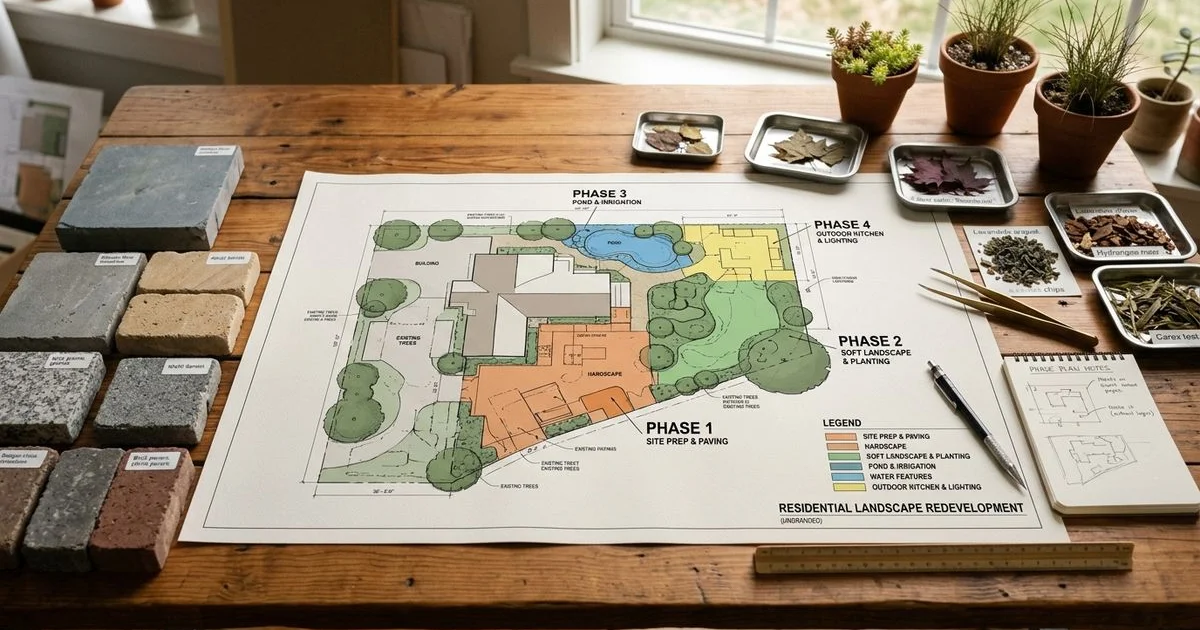
Tumbled concrete pavers pair well with softer, longer stack grass since the rounded edges and variegated color bridge the shift. For contemporary architecture or a mid century ranch, bigger modules like 24 by 24 or 16 by 32 inch porcelain or concrete systems with tight joints enhance low stack grass that simulates hybrid Bermuda. We frequently blend joints with either tight sanded seams or broader joints filled with polymeric sand if you seek a monolithic look. If you enjoy the grid of stepping pads embeded in grass, consistent spacing is non flexible. A 4 inch reveal of turf between pads looks airy, while a 2 inch reveal looks fussy and brooms poorly.
On the grass side, I define products with a face weight in the 60 to 90 ounce variety for main yards, UV supported polyethylene blades, and a textured thatch to mask infill. For high wear zones or dog runs, a shorter, denser stack drains pipes and recuperates better. Infill matters more than many understand. Sand only infill remains cooler and can assist ballast, however it compacts and can trap fines. A quality acrylic coated sand decreases dust and germs development. TPE or EPDM infills lower surface area temperature by a couple of degrees compared to crumb rubber and stay cleaner for family pets. Silica near swimming pool decks is great, but prevent high dust products by windows, they wind up within on bare feet.
Skip landscaping lumbers and railroad ties as edge restraints. They rot, twist, and telegraph through turf with time. Pick a correct composite or powder layered steel edging set flush to complete grade, or let the paver field itself serve as an edge when set up with a concrete toe.
Getting elevation and drainage right
Pasadena's storms get here in bursts. You need a hardscape installation that moves water predictably, not a patchwork of little bowls that hold puddles. I target a slope of 1.5 to 2 percent away from structures for both paver patio areas and surrounding turf. That is roughly 3 inches of fall over 12 feet, which the eye barely perceives but the water respects. If your yard currently pitches towards the house or a neighbor, bring in a drainage professional for a strategy that uses French drains, capture basins, and daylighted lines to the street or a dry well. Backyard drain done piecemeal typically leads to turf looking fine until Thanksgiving, then smelling like a pond by January. Great landscape drainage under turf begins with a compressed class II base at 4 inches minimum, 6 inches if soils are expansive or the area gets lorry loads such as a front yard parking strip.
In older Pasadena communities, you also face tree roots. Avoid cutting major roots within 10 times the trunk size measured in inches. Where roots ride high, I step up the grade with a gentle taper and a permeable base, then bridge with the turf so water and oxygen can still reach the root zone. If you need to contain a slope, a low wall developed by an experienced retaining wall builder in Pasadena can reset grades and create a usable balcony. Pair a 24 to 30 inch retaining wall with a turf play pad on top and a paver patio area listed below, and you acquire a lot of function in a small footprint.
Where curves, seams, and cuts make or break the look
Every synthetic grass task depends upon joints that disappear. In intense Pasadena light, even landscaping Pasadena CA a small mismatch in blade instructions will flash. Run all grass pieces in the very same grain direction, specifically around stepping pads and along paver edges. When a curve is part of the style, keep the radius consistent and prepare the cuts so they are on the waste side of a joint, not straddling it. Sharp inside corners are powerlessness that fray and lift, so soften them or protect them with a paver or steel edge.
For grids of paver pads set in grass, lay the pads first, then scribe and cut the grass after it is fully extended and tacked at the boundary. Do not cut tight to a pad, then attempt to extend the field, you will open a space. If you are blending a paver patio area with a turf panel without a vertical edge, tuck turf into a soldier course with a tidy mortar or polymeric sand joint, making sure not to smear adhesive onto the paver face. When the joint is right, a visitor must not be able to inform which side was set up first.
Five pairing concepts that operate in Pasadena
- Classic patio plus lawn: a tumbled concrete paver outdoor patio of about 400 square feet set against a 500 to 700 square foot synthetic turf panel, with a decomposed granite path around the border for upkeep access. Modern stepping grid: 24 by 24 inch porcelain or concrete pavers on an 8 inch module with 4 inch turf exposes, great for front lawn landscaping where you want tidy geometry and low maintenance. Courtyard ribbon: a narrow turf run, 6 to 10 feet broad, framed by masonry seat walls and a hedge, connected to a paver outdoor patio by 2 offset stepping paths. Play spine: a long, straight synthetic turf lane for kids or bocce, edged with steel and flanked by a paver sidewalk, with LED step lights set into the paver border. Poolside cool zone: low stack grass with TPE infill in between a coping edge and a paver lounge zone, broken up with direct planting beds so you stabilize green, hardscape, and shade.
Installation sequencing that avoids call backs
You can hire the best hardscape company in Pasadena and still get bad results if the workflow is incorrect. The following series has conserved me from headaches and warranty visits.
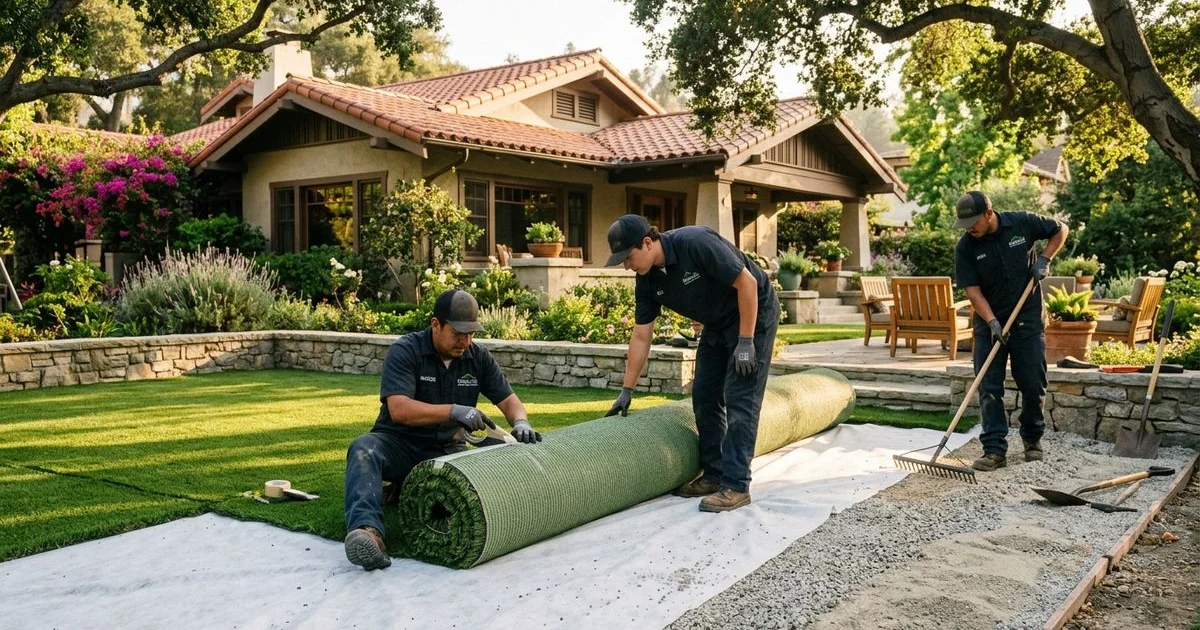
- Demo, rough grading, and drain initially. Verify final elevations and slopes on paper and with string lines. Set up lawn drain and test with a pipe or a storm simulation before you compact bases. Build walls and actions. If you are doing keeping wall installation in Pasadena, set those blocks or masonry first so you secure the edges that control future grades. Set pavers and edge restraints. Total paver patio area fields and any pathway borders. Compact, sand, and seal if the item requires it. Examine that edge heights expect the final turf stack height. Prepare grass base and install turf. Compact the base independently from pavers, screed to tight tolerances, then roll out, joint, and safe and secure grass with correct adhesives and nails or staples at intervals that match wind exposure. Finish with planting and irrigation tweaks. Cap or change heads for a dry spell tolerant garden, transform to leak where possible, and include mulch to keep fines out of the turf.
Pet use, heat, and other Pasadena particular considerations
Dogs love grass. Their owners love not dealing with mud. But urine and heat alter the information. In family pet zones, I specify antimicrobial infill and a free draining base. Prevent strong concrete underlayment that traps odor. A deodorizing enzyme rinse when a month in summer keeps things fresh. Shade is your good friend in Pasadena's July and August heat. All turf gets warmer than natural turf by midday, with surface area temperatures typically 20 to 40 degrees above ambient. 2 strategies help: pick lighter blade tones that show more light, and design shade into the strategy. A shade sail over a sitting area, a pergola by an outdoor patio, or a small tree embeded in a turf cutout modifications comfort drastically. If you are after luxury outdoor living in Pasadena, misting lines tucked into a pergola and a light permeable canopy beat baking in the sun, and they likewise safeguard turf seams from UV fatigue.
For swimming pool decks, stick with low pile turf with rounded sand or specialized infill that will not abrade bare feet, and orient seams away from the primary path to the water. Around fire features, offer yourself a non flammable apron of pavers or porcelain. Even with modern fire bowls, a roaming cinder can scar synthetic blades.
Planting that softens edges and supports water wise goals
Nothing offers a synthetic turf and paver task like great planting. In Pasadena, you can go drought tolerant without going monotone. Mass lomandra along a paver edge, add upright rosemary or Westringia for structure, and push seasonal color with salvias and kangaroo paw. For a garden design that checks out traditional, install low boxwood or Japanese holly as a clipped front to a paver walk, then relax with lavender and penstemon in the layer behind. Drip watering keeps water off pavers and out of grass infill, which secures your base.
In tight front yards, a ribbon of grass framed by low native yards and a simple course to the door looks deliberate and welcoming. For backyard landscaping in Pasadena where you host, keep taller screening bamboos or podocarpus to the border so turf and pavers stay open and usable. Xeriscape landscaping does not suggest only gravel and cacti. The very best water wise landscaping, the kind Ridgeline Outdoor Living is known for in outdoor living design Pasadena, integrates textural foliage, spaced plantings, and groundcovers that knit but do not get into turf edges.
Small lot methods that expand function
Many Pasadena lots are compact, often 40 to 60 feet broad. The best hardscape installation can make those spaces feel generous. Keep the main paver patio close to the kitchen area or living room doors to minimize flow. Then offer the turf its own purpose. A 9 by 45 foot turf lane doubles as a kids's play area and a location to set a set of lounge chairs on weekend afternoons. Stone or concrete stepping paths that meander by 6 to 8 inches at each turn suggest depth and discovery, even in little lawns. If you are on a slope, think about a two tier system: keeping wall and turf balcony up top, cooking and dining on a lower paver pad. A maintaining wall builder in Pasadena who understands soil reports and additional charge loads will keep you safe and code compliant.
Cost, life-span, and maintenance with genuine numbers
Numbers assist frame expectations. For a paver patio area in Pasadena, installed expenses typically fall in the 20 to 35 dollars per square foot variety depending on paver selection, base thickness, gain access to, and edge information. Large format porcelain tiles, specialty patterns, and complicated cutting push to the upper side. Synthetic grass set up with a correct base, quality item, and professional seaming normally varies from 12 to 22 dollars per square foot for many domestic lawns, again based on gain access to, base depth, and the variety of seams. Mixed jobs that include drain, lighting, low walls, and planting differ widely, however a 1,000 to 1,500 square foot backyard improvement commonly lands in between 45,000 and 120,000 dollars when developed as luxury outside living in Pasadena with outside kitchens and covers.
Lifespan for excellent synthetic turf is 12 to 20 years, with UV fade being the restricting element for the majority of items. Pavers consistently go 25 years or more with only joint sand revitalizes and resealing as needed. Maintenance is light. Blow debris weekly, rinse family pet zones as needed, cross brush turf once or twice a year to stand fibers up, and examine joints every spring. For pavers, replenish polymeric sand when weeds start to appear or joints open, typically every 3 to 5 years depending on tree litter and foot traffic.
Common mistakes and how professionals avoid them
I still see contractors miss the basics. The very first mistake is starved base. If a patio or grass panel feels spongy, it is almost always a base that was 2 inches when it required 4 to 6. The second mistake is no genuine edge restraint along turf, which leads to creep and ripples after a hot summer season. The third is overlooking backyard drainage and hoping the turf's perforations will do the work of a correct system. A skilled outdoor living contractor in Pasadena like Ridgeline Outdoor Living addresses these upstream, condensing bases to 95 percent density in lifts, setting steel or composite edges, and tying in landscape drain so stormwater has a clear exit. On complex sites, I bring in a drainage contractor to map circulations and size basins correctly. The very best landscape professional in Pasadena will talk you out of functions that will not age well, even if they are trending online for the moment.
Two Pasadena case keeps in mind from the field
A Madison Heights craftsman had a soggy north side lawn that never held. We shifted the outdoor patio to toppled pavers near the back entrance, set up a French drain down the long side yard, and laid 650 square feet of synthetic turf in a gentle arc to catch winter season light. The joints escaped from the house so they never flashed. The owner reports that even after a January storm, the turf was playable a day later, and the paver edge at the door killed the muddy threshold they had actually dealt with for years.
On a hillside lot above Linda Vista, the customer wanted a bocce lane but feared a bowling alley appearance. We cut a low retaining wall into the slope, leveled a 10 by 50 foot terrace, and set a paver pathway along one side with mild step lights at 12 foot periods. The grass lane doubles as a picnic strip when grandchildren check out. Heat was a concern, so we included a pair of palo verde trees embeded in 4 by 6 foot cutouts within the grass and ran drip lines to each root zone. By the second summer, the shade soothed, and the grass still checks out as a single, clean plane.
Permits, codes, and practical approvals
Most paver outdoor patios and grass setups do not need formal permits in Pasadena unless you are altering grades considerably, adding tall keeping walls, or changing drainage patterns that affect the general public right-of-way. Walls over 3 to 4 feet usually require engineering and an authorization. Any tie in to the street or curb for drain need to meet city requirements. If your neighborhood has a historic overlay or stringent HOA, secure approvals before you mobilize. Present an easy strategy that reveals where hardscape sits, how much turf area you propose compared to planting, and the products palette. When people see that the design includes drought tolerant garden beds, not a wall to wall synthetic lawn, approvals come more easily.
Choosing the ideal partner
Synthetic grass and paver work is stealthily technical. You want a hardscape home builder in Pasadena who talks about base depths, compaction, edge restraints, and seam strategy without being triggered. A patio area contractor in Pasadena who determines slopes and snaps chalk lines before a shovel strikes dirt will end up on grade and on time. Ask your paver contractor about polymeric sand types, joint widths, and whether they seal or not based upon your paver's finish. For patio area design in Pasadena, Ridgeline Outdoor Living has a credibility for coordinated outdoor home, where the turf does not feel like an afterthought but part of the geometry and flow. If the scope includes walls, validate experience with maintaining wall setup and the information that keep weep holes clear and backfill effectively drained. If your website has pooling or a history of damp basements, generate a yard drain expert so landscape drainage and building drainage do not battle each other.
A well rounded team can also help tweak the planting to match the hardscape. Garden landscaping needs to be sized to the areas, not the nursery pots. A line of three 24 inch box olives can anchor a paver terrace in such a way ten small perennials never will. For front backyard landscaping in Pasadena, think of sight lines from the street, personal privacy at living space windows, and a course that checks out as an invite, not a faster way. The right outside living business will reveal you elevations, not simply strategy views, so you can sense how a bench height wall fulfills the aircraft of your grass or how an action down from the slider sits with furniture.
Where grass, pavers, and paths shine together
When you get the base construction right, the edges crisp, and the proportions tuned to your home, the combination of artificial turf and pavers feels natural. You walk from a cool interior floor onto a level patio, then across a constant, green surface area that never ever bogs down after a storm. Kids kick a ball and it rolls true. Supper celebrations do not stall when chairs go into soft soil. In a dry spell year, the irrigation controller barely wakes. In a damp year, your landscape drains and dries while neighbors wait on their yards to bounce back.
The pairings above can bend to fit Spanish revivals, ranch homes, mid century lines, and modern-day cubes. Whether you are after a paver patio area in Pasadena for events, a simple grid of stepping stones across brilliant green, or an incorporated strategy that supports high-end landscape style with lighting, kitchens, and shade, aim for a develop that respects water, gravity, and daily usage. If you desire assistance weaving those parts together, an outside living specialist in Pasadena such as Ridgeline Outdoor Living can supervise hardscape design and construction, artificial turf installation, and the planting that frames all of it. With that group and a clear strategy, you get a landscape that looks customized on the first day and still feels right in year ten.
Business Name: Ridgeline Outdoor Living
Address: 845 E Walnut St, Pasadena, CA 91101, United States
Phone: (626) 469-5822
Ridgeline Outdoor Living
Ridgeline Outdoor Living is a Pasadena-based landscape design-build company serving Greater Los Angeles with custom outdoor living, hardscape, and drought-tolerant landscape solutions. The company specializes in patios, retaining walls, outdoor kitchens, drainage, hillside projects, and turnkey landscape construction, handling projects from design and permitting through final build and warranty.
845 E Walnut St, Pasadena, CA 91101, USA
Business Hours:
- Monday – Saturday: 8:00 AM – 6:00 PM
- Sunday: Closed
Follow Us: