Pasadena's gardens live between sun and shadow, foothill breezes and summertime heat. The city's Mediterranean environment invites outdoor living the majority of the year, yet the requirement to save water is not negotiable. Xeriscape landscaping answers that constraint with beauty and restraint, and hardscape pathways act as the framework that makes a water-smart garden feel intentional, livable, and enduring. Done well, courses assist the eye, protect the soil, harvest and infiltrate rain, and develop dry, comfortable blood circulation through plantings that can flourish on a portion of the water numerous landscapes used to require.
I have actually invested enough mornings chalking curves and afternoons setting string lines in Pasadena's compacted loam to know that paths decide whether a xeriscape sings or struggles. The right layout and materials lower watering by focusing plants in defined zones and changing high water turf with permeable, low care surface areas. The incorrect technique battles the site, sheds water into the street, or bakes in the sun. The distinctions come down to a handful of useful options at style and installation.
What water-smart really suggests for a course in Pasadena
The local hydrology shapes every choice. Winter storms arrive in bursts. A single atmospheric river can dispose 2 to 4 inches in a day. Summer seasons are long and dry. So a good hardscape style in Pasadena aims to penetrate the very first inch of rain where it falls, shed the rest safely, and remain comfortable to walk on in August.
The soil on numerous properties trends towards a silty loam with pockets of broken down granite or clay. That matters. If your soil drains well, dry-laid flagstone or permeable pavers can infiltrate overflow without pressing water versus your home. If your soil seals up when damp, you will lean on underdrains, graded base layers, and sometimes a discreet drain inlet connected to a landscape drain line. A drain specialist in Pasadena ought to validate percolation rates during layout, not as an afterthought.
Sun exposure drives material comfort. A south-facing flagstone walk absorbs heat. Light colored pavers or supported broken down granite reflect more light and remain cooler underfoot. A narrow front backyard can still hold a welcoming walk if you separate difficult surfaces with low mounding and dry spell tolerant garden bands that soften the appearance and take the heat off the course's edges.
The product palette that works here
There is nobody right course surface area. The garden's style, the slope, the user's movement needs, and the budget plan indicate different surfaces. A sampling of what has held up for our clients, from Objective Revival to modern-day hillside:
Stabilized decayed granite. A preferred for informal paths and broad garden meanders. The stabilizer binds fines so you can sweep without continuous ruts. It drains pipes, it reads like a soil tone, and it keeps plants in the spotlight. The base rock still matters. On slopes steeper than about 5 percent, anticipate edging and cross drains to catch lateral flow.
Permeable pavers. When you desire crisp lines and an all-weather surface, paver outdoor patios and paths are difficult to beat. A paver professional in Pasadena can set permeable units on an open graded base that doubles as a subsurface tank. With the joints filled with tidy aggregate instead of polymeric sand, stormwater infiltrates rather than runs off. Permeable installations cost more in advance than standard pavers but are a real water sensible landscaping move in our microclimate.
Dry-laid flagstone. California gold or bluestone, spaced with drought tolerant groundcovers like Dymondia or thyme in sunnier areas, turns a course into a garden function. Keep joints broader where you desire a softer appearance. On shady north exposures where moss wants to grow, prefer tighter joints or a great gravel infill to prevent slippery patches.
Gravel with fines. For secondary runs and energy side backyards that still need an ended up appearance, a compacted gravel path with a binder layer can perform well. In Pasadena's wind, rounded pea gravel travels. Angular crushed rock locks in better and tracks less on shoes.
Concrete bands and poured edges. Even in xeriscape landscapes, a put edge can be worth it. Steel edging works too, though it heats up. Edging keeps DG where it belongs, avoids weed incursion from planting beds, and offers a long, even reference line that elevates the whole garden. If you are bringing in a patio contractor in Pasadena for a larger put, think about incorporating curbs and cut strips around the path network.
Artificial grass accents. Artificial turf in Pasadena fits in tight yards and play strips where watering is impractical. Set turf panels in between paver ribbons or along a course to break up heat and add softness. It does not drink, however it does need a tidy, permeable base and routine brushing to look good. The blend and sew are what separate a premium artificial yard installation from a plastic patch.
How courses support a xeriscape planting plan
A strong path network lets you concentrate watering in high value zones. In yard landscaping, I like to pull the primary walk slightly off center, then sculpt planting islands on the sunny side to catch water that sheds from the path. Front backyard landscaping in Pasadena frequently indicates a street tree, a city parkway strip, and a sloped lot. Because setting, terraced bands with low maintaining walls and intermediate courses slow down water and let you tuck in natives at the ideal elevation.
Plant selection matters as much as routing. California natives and Mediterranean types that thrive here consist of manzanita, ceanothus, salvias, santolina, Westringia, and lomandra. With a path dictating the microclimates, you can keep the hottest, driest edge for silver-leaved aromatics and the shadier, wind-protected bend for ferns or coral bells. The edge where hardscape satisfies soil is the very best spot to sneak in subsurface drip lines. They hardly ever require more than once weekly watering after establishment, and in winter season you can typically turn them off entirely.
If you plan to weave in a paver patio area or outside cooking location, locate it where evening shade hits first, typically the east side of major trees or the north side of a wall. That cooling pattern lowers heat load on adjacent paths and assists evergreen shrubs retain moisture. An outdoor living professional in Pasadena will often run gas and electrical underneath these surfaces. Group those energies with the path subbase work to lessen excavation in planted zones later.
Grading, drain, and the parts nobody sees
The success of a xeriscape path is chosen down in the base layers. In Pasadena's older neighborhoods, the native soil is often compressed from decades of foot traffic or previous yards. If you dig 4 inches and struck a hardpan, including an inch of gravel on top will not turn it permeable. You need to scarify, then rebuild.
For permeable pavers and DG, I define an open graded crushed base in two lifts. The bottom lift serves as the tank for rain occasions, typically 4 to 6 inches thick for walkways and more for patio areas. The top lift shifts to a finer aggregate so your surface area finish compacts uniformly. Side by side with that, I like to run perforated drainpipe under the low points where grades press water towards a structure. Even if infiltration is the objective, an overflow course for the storms that go beyond capacity will conserve headaches.
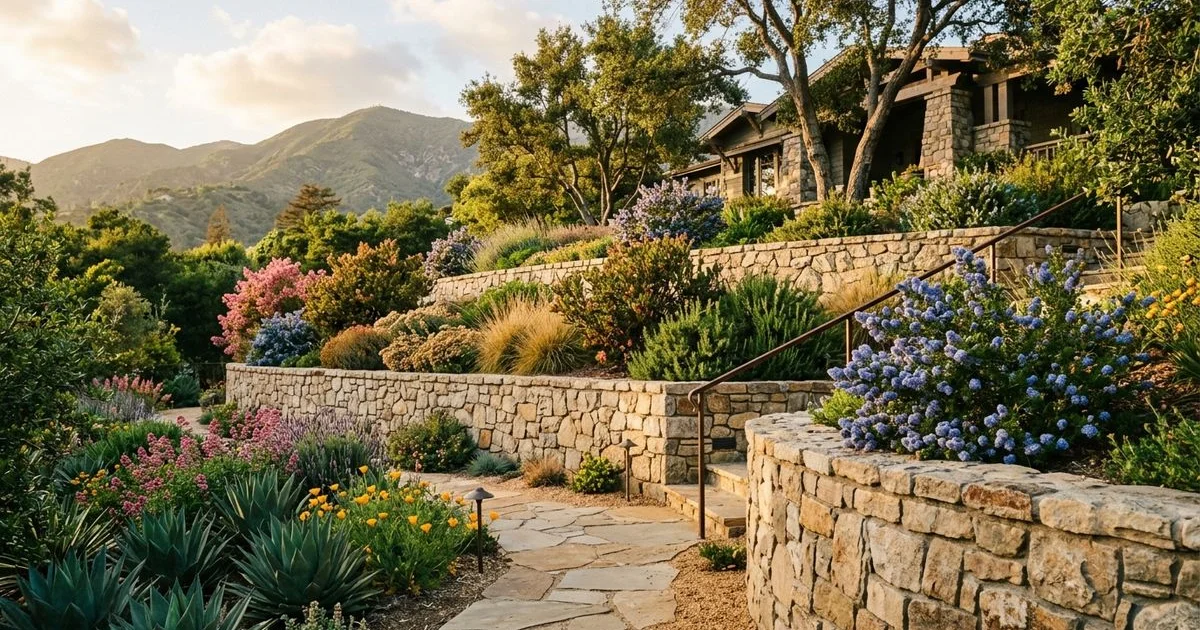
Where slopes exceed 7 or 8 percent, break the encounter benches. A good maintaining wall builder in Pasadena can develop 12 to 18 inch rises with battered faces that hold magnificently. Constantly construct walls with backdrains and weep points. A lot of landscapes skip this and end up with hydrostatic pressure and leaning stone. For small grade modifications, an alternating pattern of meander and cross-slope tilt gets the job done. The path tilts simply enough to shed water into a swale filled with cobble or into a planting strip close sedges that can drink up a storm.
If a residential or commercial property sits below street grade, consider tying the path network to a discreet drain inlet and landscape drainage line that exits at the curb under an authorization. A drain contractor in Pasadena will collaborate with Public Functions on that aproned outlet. It is not attractive, however absolutely nothing weakens a water sensible garden much faster than standing water after a January storm.
Planning the path and width with human convenience in mind
Paths earn their keep when they feel uncomplicated to utilize. That starts with truthful width. A single file garden walk can be 30 to 36 inches. The minute you expect two individuals side by side or a stroller, plan 42 to 48 inches. If a client needs ADA level gain access to, we push to 60 inches at turn points and keep slope breaks mild, with firm surface areas like pavers or supported DG. Stepping stones look charming in pictures, however for aging in place or regular amusing, they get old fast.
Curves belong where there is something to find. If the course meanders with nothing to reveal, it ends up being an affectation and wastes square video that might be planted. A much better relocation is to run straight where the function is primary, such as from driveway to front door, then let secondary courses bend toward sitting nooks or a citrus grove. In outside home, align a course with the longest axis of a patio area so the visual flow makes the area feel bigger.
At shifts, make the limit clear. Where DG meets pavers, use a flush steel edging. Where a wood deck meets stone, utilize a shadow line. Where a gravel side yard satisfies a gate, utilize a concrete band that captures grit and keeps hinges from grinding. These little moves keep upkeep low and the experience high.
A concise pre-construction checklist
- Confirm utility finds, irrigation strategies, and lighting conduit paths before excavation. Walk the storm path with a tube to see where water naturally wishes to go. Set string lines and grade stakes for both finished surface and base elevations, not just one or the other. Select edging that fits the product and sun, steel in shade, concrete in hot exposures. Order 10 to 15 percent additional stone or pavers for cuts and future repair work, especially for colors that differ by lot.
Installation craft that pays you back for years
On a current foothill task, a homeowner desired a seamless course that moved from front yard to side lawn to a peaceful herb court behind the garage. We developed a continuous base with open graded aggregate, then changed just the surface finish at each garden room. Flagstone in front for a timeless welcome, pavers at the side lawn for wheelbarrow task, and stabilized DG in the herb court so the scent increased with each footfall. Due to the fact that the base was continuous and pitched consistently, stormwater crossed the lawn in one controlled sheet, never ponding.
If you are doing a paver patio, set edges early and tight. Edges are the structure. Polymeric sand offers a clean surface for basic pavers where you desire very little weed growth in joints. For permeable pavers, do not use polymeric sand. Use the defined clean pea-sized aggregate and keep a few bags on hand to complement after the first rain settles the joints.
For DG courses, compact in thin lifts. If you attempt to compact more than 2 inches at a time, you get a crust over a sponge. Stabilizers differ. Evaluate a small area to dial water content. Too damp and you get splotching, too dry and it never sets. Keep wheel ruts out by staging materials close and limiting rush hour till the binder remedies. On shady websites, think about a light top dressing of gravel rather of binder to prevent algae staining.
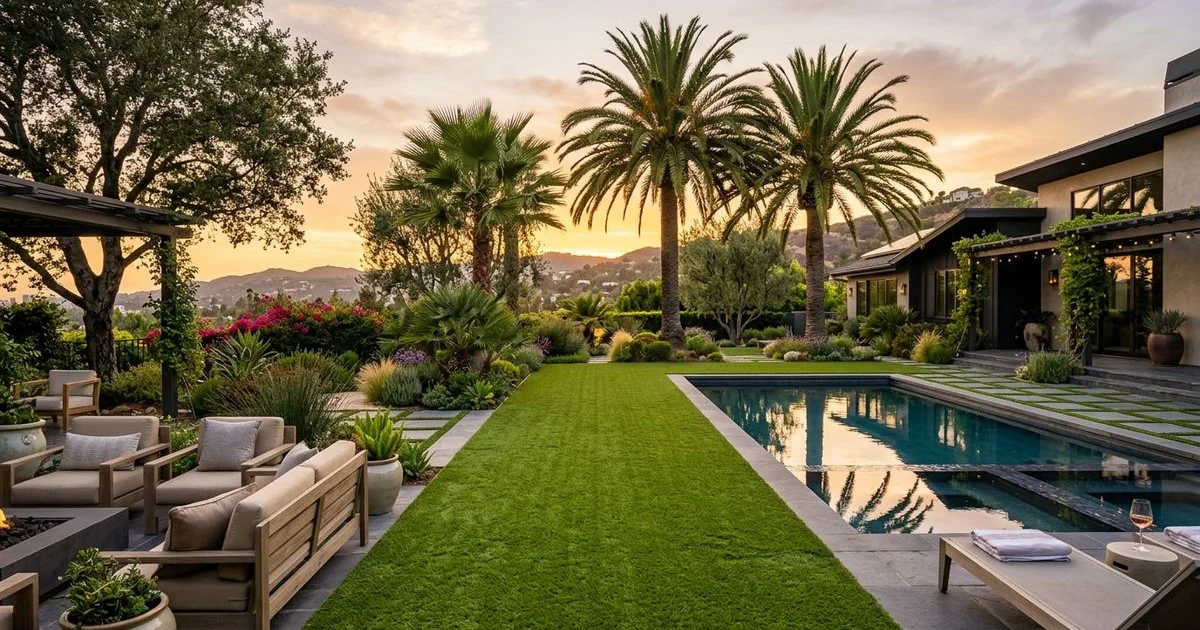
Where paths interface with yards, artificial turf has become a strong option for water-smart lawns. Artificial turf setup in Pasadena gain from a permeable base tied to the path base. Prevent covering grass tight to tree trunks. Leave a mulch ring so roots breathe and irrigation remains focused at the dripline.
Integrating keeping walls, steps, and accents
Hillside residential or commercial properties call for choreography. Retaining wall installation in Pasadena generally pairs with actions and landings. For a garden that needs to feel natural, run a 3 rise step, then a landing that functions as a seating nook. Differ riser heights somewhat within code where the grade changes demand it, however keep each flight consistent so muscle memory works. Stone piece treads with crushed rock landings check out beautifully in a xeriscape, but on dubious slopes poured concrete with a broom surface is safer.
Accent aspects help the eye decrease. A boulder anchor at a curve, a corten steel planter where the path splits, or a low stucco wall that backs a bench. In high-end outdoor living jobs, a gas fire feature tucked off the main course anchors evening events. High-end landscape style in Pasadena often weds these aspects with restrained planting to keep type lines clean.
Lighting, comfort, and safety
Path lights ought to brighten the surface, not blind the visitor. Low components at 12 to 18 inches, staggered on rotating sides, reduce glare and enhance depth perception. Tall uplights for trees can clean a path, however only if the bark light does not throw your step into high contrast. Integrate conduit throughout hardscape setup so you are not trenching later through finished surfaces.
Heat matters. For paver patio area locations and south facing runs, choose light to mid tone materials to keep bare-foot temperatures workable. Include shade structures where practical. Vines on a steel trellis over a course cool the air more than material alone. In Pasadena, Santa Ana winds can remove watering wetness ridgeline outdoor living quickly. If your course edges run hot, use mulch bands below shrubs to lower evaporation and keep roots cool.
Maintenance that appreciates the water budget
A great hardscape should request for little. Sweep or blow particles off permeable surfaces so joints do not clog. Leading up permeable paver joints with clean stone every year or two in heavy traffic zones. For DG, anticipate a light recompaction and a few bags of binder blend every couple of years where trash cans roll or back yard jobs cut across. Pressure wash moderately. Instead, utilize a stiff broom and a light rinse to protect joint integrity.
Weed pressure drops when edges are tight and base layers are deep and tidy. If windblown seed does take hold, pull early. Herbicides around natives are difficult. Area flame weeding on DG paths works if the binder is treated and you move quickly, but test in an unnoticeable area first. Where a path fulfills planting beds, top up mulch on the bed side to bury any windblown seed before it roots.
Costs, timelines, and where the money hides
Costs vary by access and surface. As a rough pattern for Pasadena over the last couple of seasons, supported DG courses land in the lower tier. Permeable pavers trend middle to upper, flagstone with custom-made cuts at the upper end. Keeping walls press spending plans more than surface areas. Steps and landings add precision and time. Lighting and drain are multipliers due to the fact that you are adding trades and inspections.
The cash individuals do not see remains in excavation and base installation. Tight side lawns with hand transporting include days. If soils are bad, exporting spoils and importing tidy aggregate doubles trucking. When customers ask where to invest and where to conserve, I suggest investing in the base, drain, and edging, and after that selecting a surface you like within the staying spending plan. A tidy DG path over a robust base surpasses a premium stone set on a skimpy base every time.
Permits, codes, and community context
Most Pasadena path tasks do not require authorizations unless they alter drainage onto public right of way, add walls over 3 to 4 feet, or link to gas and electrical. That stated, walkway cuts for drainage outlets and considerable changes to front yard grades set off reviews. In historic districts, visible front backyard hardscape changes may require style review. A finest landscape contractor in Pasadena will browse the minor documentation before demolition begins. It conserves weeks.
Neighborhood fabric matters too. Artisan cottages wear brick and river rock well. Mid-century homes often sing with simple gray pavers and clipped plantings. Spanish Revival entries welcome saltillo and warm stone. Matching the course language to the architecture is not a rule, simply a reputable way to make a xeriscape feel rooted rather than trendy.
Common errors, and smarter alternatives
Running a course tight to your home due to the fact that it appears tidy, then fighting splashback and mildew that spots stucco. Give the wall breathing space. A 12 to 18 inch planting band captures rain and cools the facade.
Choosing dark, heat-absorbing stone for a full sun entry due to the fact that it looked excellent online. Put samples in the afternoon sun at your website and stand on them barefoot. Your feet will assist the choice.
Undersizing widths to protect planting area, then regretting how confined the walk feels. Push a foot of width into the path and let the planting do more with less. Thick shrubs at key sightlines will still make the garden feel lush.
Installing polymeric sand in joints for a permeable paver system. The surface will look neat, but you just sealed your infiltration.
Skipping underdrains on clay soils because the leading inch looked dry. After the very first huge storm, the base draws water like a sponge and never dries, leading to settlement and green slime.
When to call a professional and what to ask
DIY can manage short, level runs. Once slopes, drainage connections, or keeping walls get in the image, a hardscape business in Pasadena brings the engineering and field experience to keep things safe and beautiful. If you veterinarian a hardscape contractor in Pasadena, ask to see a project after a storm. That informs you more than any photo. Ask how they handle base compaction, what the infiltration strategy is, and how they will secure existing trees.
If your vision includes a brand-new outdoor patio, outside kitchen area, or fire feature, you might gain from a complete outdoor living design in Pasadena that coordinates structures, energies, and planting. Ridgeline Outdoor Living has actually managed integrated outdoor patio building and construction, paver patio installations, and garden landscaping where the path network is the foundation of daily use. The right outside living contractor in Pasadena will phase the work so that trenches and avenues are set before final surface areas, and tie in lawn drainage to keep everything prepared for winter.
On the planting side, a designer competent in drought tolerant garden preparation will tune the microclimates along each path. Organizing types by water need and sun exposure is not a slogan. It is the difference in between a flourishing, low water garden and a patchwork of struggling plants. When the hardscape routes water and the planting zones are tight, irrigation schedules reduce dramatically.
A pair of on-the-ground examples
A compact front backyard in Bungalow Paradise had torn up lawn and a narrow concrete ribbon to the porch. We got rid of the ribbon and set a 48 inch wide permeable paver walk, arcing gently from sidewalk to entry. Flanking the walk, bermed beds with manzanita and purple sage drank what the course shed in winter. We added a 12 inch concrete cut strip at the street parkway and a small DG loop near the mailbox where plans land. The homeowner now waters those beds gently in summertime and leaves the system off from November to March most years.
On a San Rafael hillside, the course network had to do with safety as much as water. We benched the slope with 2 low stone maintaining walls, set flagstone treads with compacted gravel landings, and threaded a perforated drain behind both walls. The slope had a lens of clay that used to weep throughout the surface area. After building and construction, storms now seep into the wall backfill and exit at a discreet cobble swale near the driveway. Plantings of artemisia and westringia hug the actions, and the owner's water use come by half due to the fact that watering is now a tight drip zone simply around the plants, not a guessing game across a sloped lawn.
A basic develop series that keeps tasks on track
- Demo and rough grade to reveal native soil and verify slope directions. Install drains pipes and avenues first so trenches never cross completed base layers. Build base in 2 lifts, condensing to spec and validating grades with a laser level. Set edging and restraints, then set up the selected surface area with mindful joint treatment. Water test before last cleanup. Watch flow in real time and adjust while equipment is still on site.
Tying all of it together
Done right, hardscape paths in a Pasadena xeriscape do more than link point A to point B. They carry stormwater into the soil, they specify the bones of the garden, and they make outside spaces functional in January and July. The surface areas you select, the way you grade, the feel of each curve or straight run, all add to a landscape that is both water smart and deeply habitable. Whether you lean toward a refined paver outdoor patio, a shaded DG meander, or a tight ribbon of flagstone through native grasses, give the hidden layers the regard they deserve. If you generate aid, search for a partner who deals with base, drain, and edge information as seriously as they deal with finishes.
Pasadena's gardens have constantly been about craft, environment, and comfort. With thoughtful hardscape style and setup, the path to a water-smart garden is actual, beautiful, and durable for decades. If you are mapping your own job, think about how each action can minimize overflow, funnel life into the soil below, and make the simple act of walking outside the best part of the day.
Business Name: Ridgeline Outdoor Living
Address: 845 E Walnut St, Pasadena, CA 91101, United States
Phone: (626) 469-5822
Ridgeline Outdoor Living
Ridgeline Outdoor Living is a Pasadena-based landscape design-build company serving Greater Los Angeles with custom outdoor living, hardscape, and drought-tolerant landscape solutions. The company specializes in patios, retaining walls, outdoor kitchens, drainage, hillside projects, and turnkey landscape construction, handling projects from design and permitting through final build and warranty.
845 E Walnut St, Pasadena, CA 91101, USA
Business Hours:
- Monday – Saturday: 8:00 AM – 6:00 PM
- Sunday: Closed
Follow Us: